Sunday, May 1, 2016

Fungi Field Trip Post by Ali


Fungi are heterotrophic, multi nucleated, and multi cellular organisms. Examples include yeast (only unicellular fungi), molds and mushrooms. Most fungi are composed of multiple filaments, called hyphae, grouped together to form mycelium. Fungi can live as symbionts, parasites or saprophytes. According to Korena, Fungi function as decomposers of dead plants and without them, our environment is incomplete. For example, the following pictures show some fungi that were that were observed during our field trip in Pine Ridge Park.  


Image 1. Fungi are the main organisms that will decompose these dead woods. 

The primary role of fungi in ecology is to decompose dead plants. Unlike algae or plants, fungi lack the chlorophyll necessary for photosynthesis and must therefore live as parasites or saprobes. As Saprophytes, most fungi depend on dead plants for source of nutrition and metabolic energy. 


Image 2. Fungi grow on dead plants to decompose them and get their nutrition at the same time. they wrap their hyphae around root tips of trees and take in nutrition from the tree

Image 3. A big white chunk of fungi grown on a piece of wood.

Fungi in Image 3. was very solid like a rock. It seems that it was attached to the piece of wood for a long time. 

Image 4. Another piece of wood that has fungi grown on top of it.

As seen in above images, fungi grows on dead plants to find its food. Typically these fungi release digestive enzymes onto their food source, partially dissolving it to make the necessary nutrients available. Then, fungi use absorption to feed themselves. On a more broader level, fungi can break down most organic compounds including lignin, a compound that is a major component of wood and is very difficult to break down or digest. In addition, they recycle decomposing matter which enrich the soil and allow for new plants to grow. 


Furthermore, not all fungi are decomposers. Some fungi form symbiotic relationships, for example, lichens and miccorhizal fungi. Lichens symbiotic relationship with either a fungus and greel algae or a fungus and cyanobacterium.

Image 5. Shows a form of fungi named lichens grown on a branch of dead tree.

Lichens are subdivided into fruticose, crustcose, and foliose. Image 5. represents foliose and we also observed fruticose during our trip. 

Another fungi that tend to live as symbiotic is micchorizhal fungi:

Image 6. Amanita muscaria is a kind of miccorhizal fungi. Their walls are made of chitin. Their fruiting body is above the ground and their roots form long branches under ground. 

Myccorhizal fungi form symbiotic association with plants. Such fungi form symbiosis between a fungus and the roots of vascular plants. It is a mutualistic relationship because both host and organism benefit. The roots of miccorizhal fungi live underground and attaches to the roots of plants. Miccorizhal fungi provide nutrients to plant; thus, resulting in better growth. At the same time, plants provide miccorizhal fungi the glucose they need.


In addition to fungi, we also observed mosses during our trip to Pine Ridge Park:

Image 7. Moss grown on a dead tree.

Although mosses are small and attaches to plants, they are not lichens or fungi. Rather, they are considered plants themselves. To be more specific, they belong to the phylum Bryophyta. 
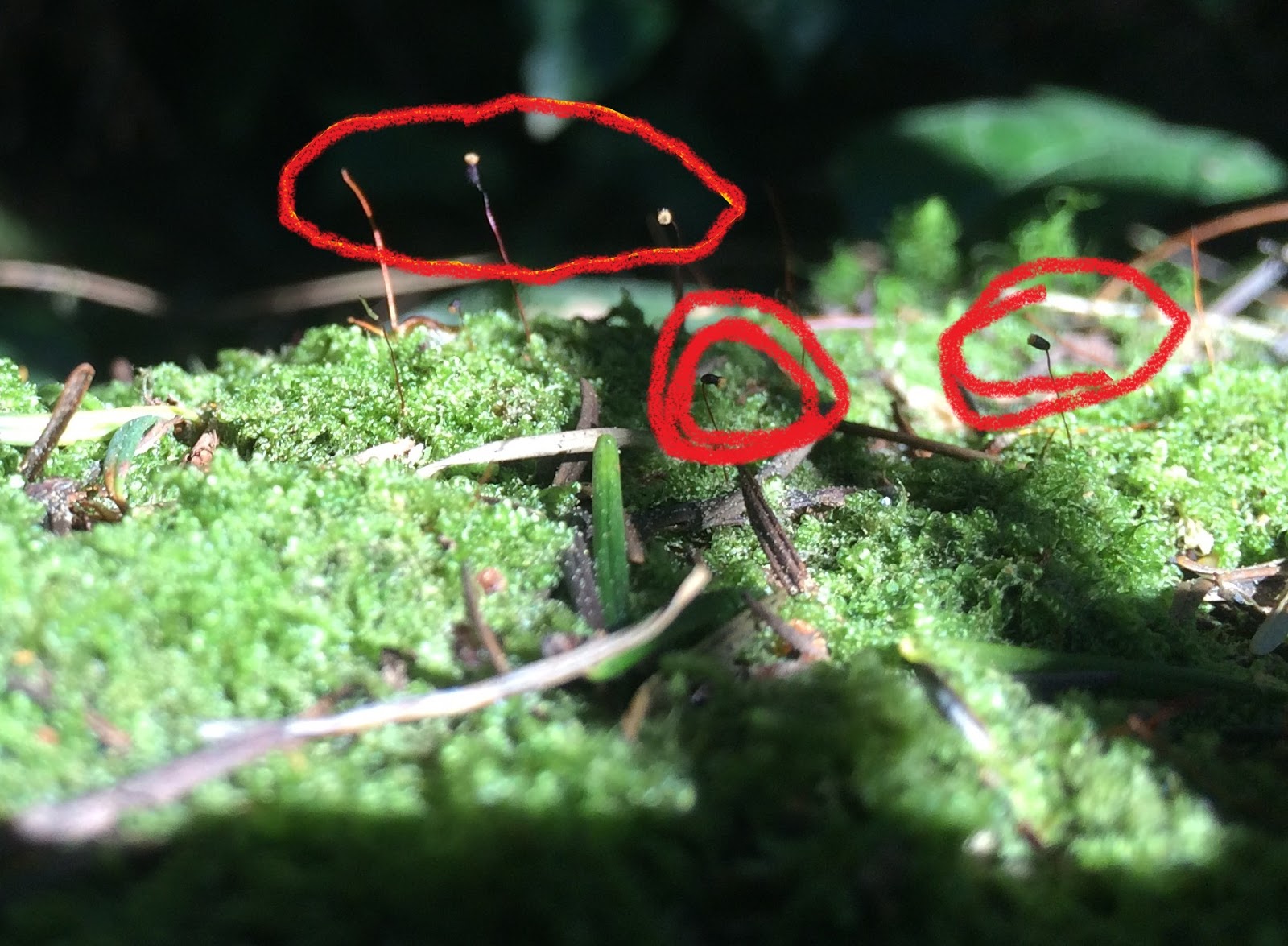
Image 8. The sporophytes of a moss.

We were lucky to experience a moss that had their sprophyte cells grown up. Sporophytic cells produce haploid spores which reaches the soil and then germinate to produce the gametophytes. 

The field trip to Pine Ridge Park was a great experience. It allowed us to observe fungi and mosses that were found in the park. This practical approach informed the understanding of the things we had learned from the lectures or the book. 


Fungi Field Trip Adventure

By Thomas Gray

Pictures and field trip occurred on 4/18/16

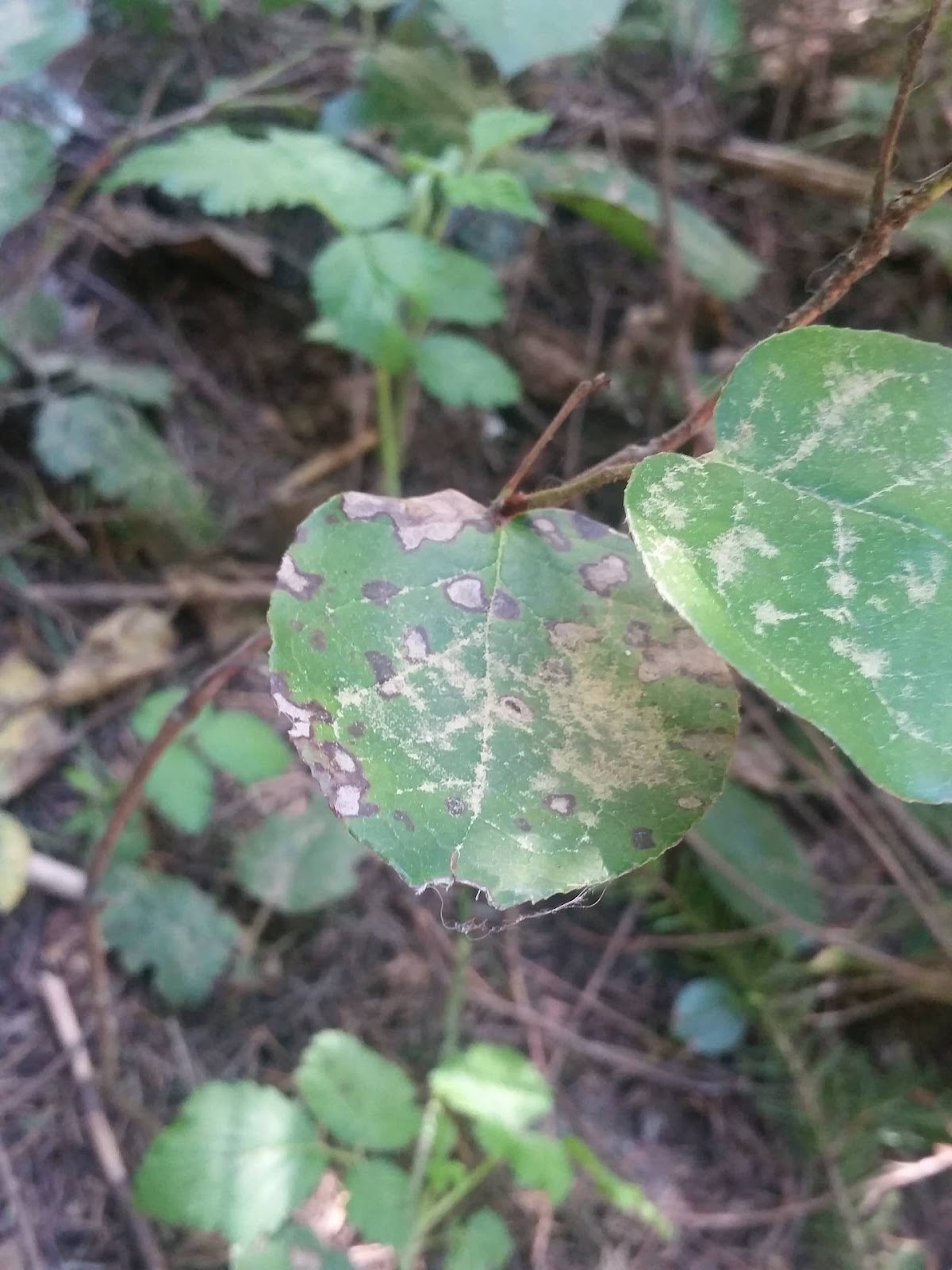
The most interesting thing I found is that things we might not think are fungi are in fact fungal bodies.  For instance, Fungi are able to infect plants and signs are visible of a fungal infection.  As we were walking on the trail, I noticed that a plant had discolorations on its leaves.  These turned out to be a fungal infection and that the plant was being attacked.  I always thought for the longest time it was just sick or the leaves were dying.  Now I know that the real reason is that the fungus has infected the plant and is spreading throughout.  

One thing that I learned that I don't have a picture of is the network that fungi display in a particular environment.  They connect trees, allowing them to share resources as well as talk to one another.  This process is done through the fungal mycellia network.  It's amazing that one fungal organism can spread out across a whole forest, making them so much cooler than I first realized!  The only picture I have is a pretty picture of the treetops, which you guys can think that they are connected through a a single fungal organism.


There were also a few mushrooms we were able to see that I was able to touch and feel.  The first was the typical mushroom spore producing body.  Though it was little and cute, it was weird to imagine how they can appear in the morning and be gone by the evening.  That's one fast growing fungus! Though this isn't the specific species, it was very fun to touch and see the small spores fall out!


Finally, was the lichen that we found.  This was a mutualistic relationship between plants and fungi.  I always thought they were small plants growing on trees, but never knew that it was actually comprised of two different organisms to form one.


Here is a little puddle I found inside a tree that looked like a heart! I'm sure there were some algae and some little Archea  and bacteria inside!

Fungi Field Trip

Fungi Field Trip 4/18/2016

Brian Ravenel

This outdoor lab was a great class and an excellent way to learn more about fungi, and its different niches, life cycles, and methods of identification. It was beneficial having two instructors available to have more opportunities to ask questions and hear them talk about personal experiences working with fungi for additional learning points and perspectives.

There were three main points that I took away from the field trip.

The first was that without fungi our planet would look very different than it is today. If woody material was left to break down at its own pace, then terrestrial earth would be covered in piles of dead logs slowly decomposing waiting for a fire to come along and hasten the process. This image really sunk in and was a great point in how vital fungi are to the cycle of life. I hope that we find a similar solution to the land fills we are creating today and maybe fungi can help provide an answer for a method of quickly degrading man-made products.

The second main point was that fungi can grow into immense organisms through their network of mycelium. The largest organism in the world record is currently being held by a parasitic fungus in Oregon state. Prior to this class I believed a fungus was mostly the mushroom itself and had no idea of the mycelium network that existed underground.

http://www.bbc.com/earth/story/20141114-the-biggest-organism-in-the-world

Third, a scientist can make a diagnosis on a tree's health by looking for signs of internal fungus invasion. The place I work has had a lot of large fallen branches during the past few wind storms and after this lab I went and looked at them and saw some evidence of poor health that Karina described on the field trip. While this is only one of a few factors it was interesting to look for signs such as discoloration of bark, black or white color liquid oozing out of the tree, and any fungi fruiting bodies growing from the tree itself.

It was also funny and useful to hear about the different ways to determine if a fungus is safe or not through smell, taste, and the physical indicators such as fungi structure, color, false and true gills, and size.

Pictures from lab field trip:


Image of lichen, a composite organism made up of a fungus, cyanobacteria, and alga.


Saprophytic species of Basidiomycota


Korena pointing out evidence of fungal invasion of tree, the black color and bleeding from trunk


Fungi Field Trip by Jaena Bautista


Fungi Field Trip
by Jaena Bautista


Fungi includes some of the most important organisms around us. It functions to break down dead organic materials, take part in the role of nutrient cycling through ecosystems, serve as food and much more. During the field trip, different kinds of fungi were observed. Some of which are the decomposers (saprobes), others are pathogenic which cause diseases to plants and lastly, mycorrhizal fungi which is in association with the root tips of plants. Most vascular plants could not grow without the symbiotic fungi, or mycorrhizae, that inhabit their roots and supply essential nutrients


13106565_1155976774421131_1171625834_o.jpg
Figure 1: Tree with fungal disease


One of the most interesting parts for me in the field trip is knowing that a tree can be sick just be looking at it. Seeing the picture from above, the black spots indicate that pathogenic fungi are starting to decompose and eat the bark from inside.

13128950_1155976834421125_1909698185_o.jpg
Figure 2: Fungi eats up heartwood


In this picture, it shows that tree is affected by fungal disease. Fungi have eaten most of the heartwood inside of the branch which caused the branch to fall off. In addition, the tree will bleed the sap which is seen as the white part in the picture.
Fungi that are wood rotters cause a great damage when they attack the heartwood of trees. The entry of fungi into the heartwood is due to exposure of the heartwood. This comes about when the lower branches become shaded and die. After falling off, the heartwood is exposed and fungi can gain entry. This may also occur when lower branches of trees are trimmed which causes heart rot to occur. Usually, the types of trees attacked is dependent upon the fungus.


The good news is that heartwood rots do not usually kill trees in a big hurry. They can live with a tree for decades before the tree succumbs. The rotting of the interior wood can weaken the tree, however, making it more vulnerable to breakage, wind throw, insect damage, and other diseases.

Some info: http://www.botany.hawaii.edu/faculty/wong/BOT135/LECT10.HTM


13120655_1155976701087805_516545733_o.jpg
Figure 3: Leaf spots
Leaf spots are also caused by fungal pathogens. This is another type of parasitic relationship between a leaf and a fungus. As the fungus gains nutrients from the leaf, the leaf which is the host dies. Although the host is affected, decomposition and nutrient cycling still occurs ---this shows how beneficial fungi are to the ecosystem.


13112498_1155976854421123_569860788_o.jpg
Figure 4: Fungi on manure
I can say fungi as saprobes (decomposers) are the most essential types. For we can see in the image, fungi also grows on manures. It decomposes the manure and brings nutrients back to the ecosystem. Together with bacteria, they are responsible for most of the recycling which returns dead material to the soil in a form in which it can be reused. Without fungi, these recycling activities would be reduced. We would be lost under piles of dead plant and animal remains.


To sum it all up, the field trip was not only fun but also gave us more information about fungi while experiencing it. This experience came up to be more than what I expected. I was more intrigued on how cycles on forests function and made me more curious on what else could I learn more. I would love to have more of these kinds of trips for educational purposes that just learning stuff from microscopes and books.

My Fungi Field Trip Experience by Shawna Steele


There are 3 main groups of fungi: Saprophytic, Mycorrhizal, and Pathogenic. Luckily for us, we were able to explore examples of each group!

The first main group of fungi is the Saprophytes. They are the decomposers who clean up dead organic material such as wood, leaves, needles, and manure. Majority of fungi are Saprophytic and are harmless as well as beneficial to the ecosystem. They are responsible for recycling nutrients, minerals, and other needed material used by plants back into our ecosystem once organisms die. Without them, our forests would be full of dead trees, animals, as well as other dead materials such as leaves and logs. 


Image 1. White fungal growth (mycelium) is growing in the log to begin the process of decomposing. 
Image 2. Saprophytic decomposers can also grow into fruiting bodies (mushrooms or toadstools). Hope you get the reference...

The second main group of fungi is the mycorrhiza mushrooms. They are the best friends of plants who they've co-evolved with on land. Korena said that the word "mycorrhiza" describes the relationship but no the identity of the fungi. The fungi's root tips live underground and are intermingled with the roots of living plants thus providing minerals and nutrients. Both the plant and fungi benefit, living in a mutualistic relationship. There are ectomycorrhizal (hyphae do not penetrate the cells of the plant roots) and endomycorrhizal (hyphae penetrates cells of roots) mushrooms. 

Image 3. Amanita  mushroom (ectomycorrhizal). Korena explained how different types of mushroom features/characteristics can distinguish genus/species. These characteristics include taste, smell, how the stem breaks, colors of the gill prints, and the spores, 

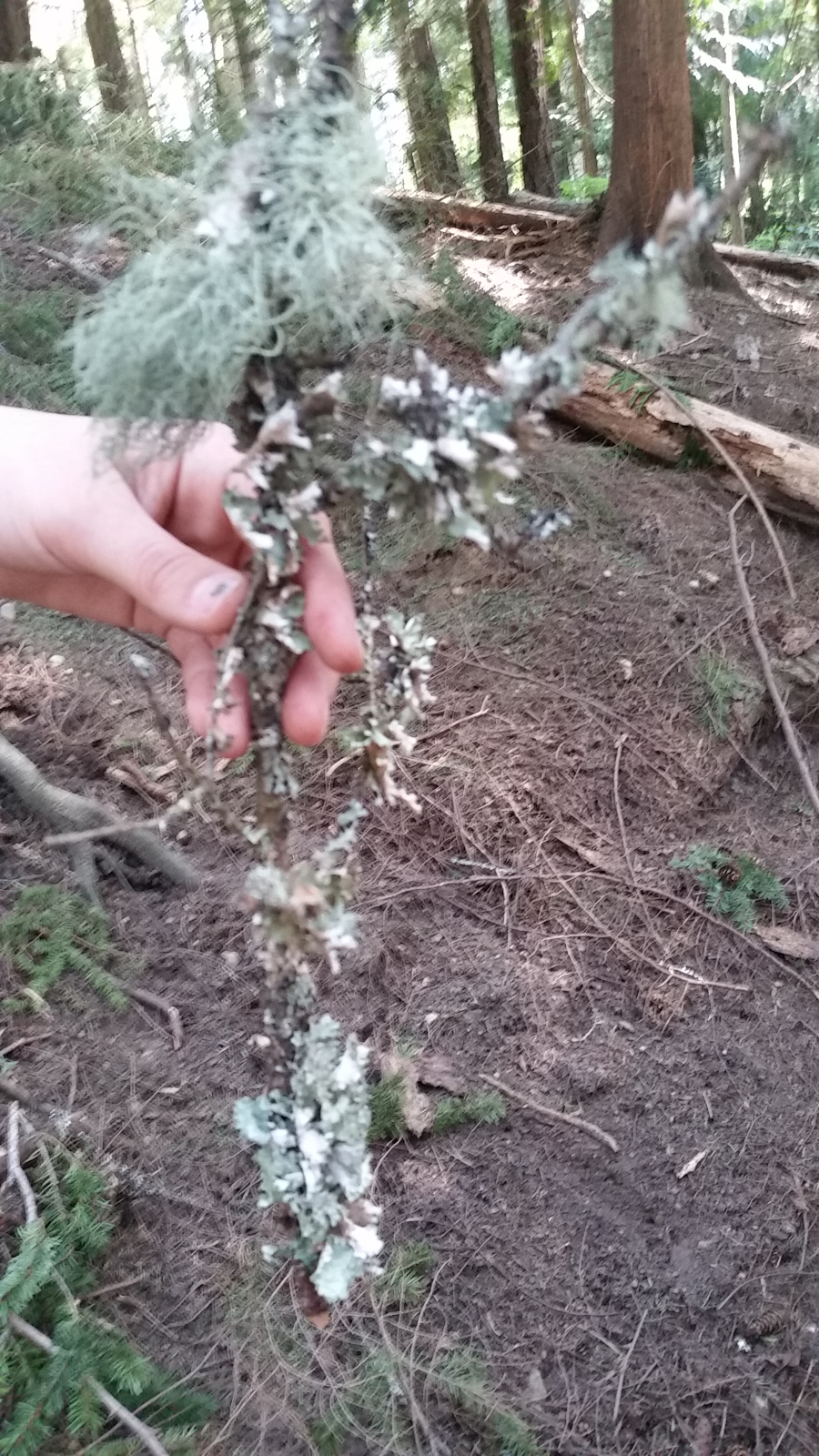
The last main group of mushrooms is the pathogenic fungi. Obviously, the name gives away what this fungus can do.  There are two main fungi in this group: lichens and mosses. Both are photosynthetic and lichens are composite fungi. These fungi grow on living trees and other plants and suck away the nutrients. Once their host dies, their relationship switches from parasitic to saprophytic. 

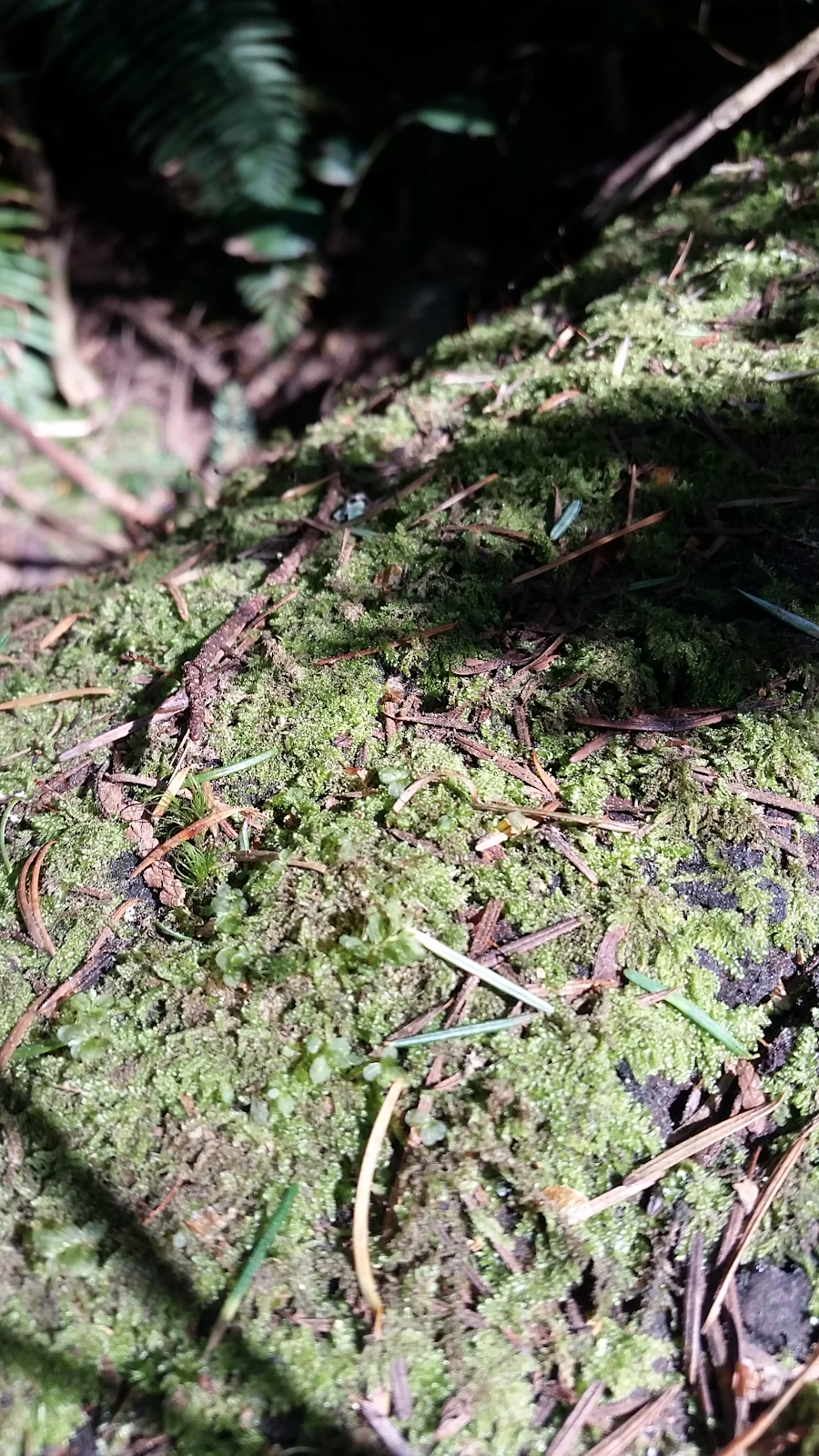
Images 4 and 5 are lichens. One branch had 3 different types of lichen (crust, witch hair, & one more  I didn't remember to write down). Images 6 and 7 are mosses. 
Image 4. Lichen

Image 5. Lichen

Image 6. Moss
Image 7. Close up of moss. The green things that are sticking up are the sporophytes. 

Overall, I felt that the field trip was very informational and fun. It's definitely opened my eyes up to what's really going on in the forests that I walk through. It's amazing how far the networks of mushrooms can reach and how important fungi really is to the well being of forests and other ecological habitats. Korena was a great tour guide in our forest field trip and it was a great change from being inside the lab!

Bio 213 Field Trip Individual Post by: Lisa Merritt

Lisa Merritt
Bio 213 -Fungi Field Trip Post

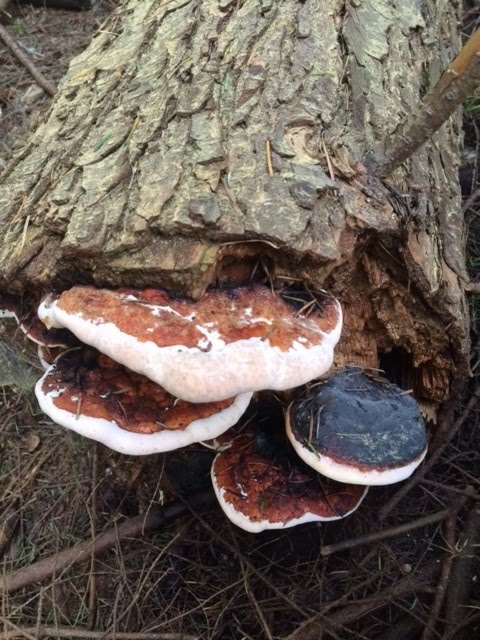
I learned so much and enjoyed this field trip! As I had mentioned at the beginning of the field trip I grew up in a large city and the only exposure to plants was Central Park or Summer Camp. I also lived in North Carolina but never much looked at plants except on a superficial level. The most interesting thing that I learned is that one plant in one location can have a relationship with another in a farther off location. I also thought the hard mushrooms we saw were fascinating I had never seen hard mushrooms before. Carina called them Conk mushrooms. After further research they are called Bracket fungus and they are basidiomycetes. Bracket fungi are sturdy and tough. They produce basidiospores that make up the undersurface. The brackets grown can be a single row of a few caps to dozens of rows that can weigh several hundred pounds. They typically live on the side of trees and logs that are living or dead. Some can be parasitic, some saprotrophic, some both. The most common are the Ganoderma who play a part in tree death and then may feed off the trees wood for years after.  Some form perennially and some form annually.
Figure 1: Image of bracket fungus.
Figure 2: An image of another type pf bracket fungus seen on the field trip
Another interesting point was the fact we always learn about telling an age of a tree by its rings. However, I never knew what contributed to it that there are actually different layers to a tree. The very outer layer is the outer bark that protects the tree from insects and provides insulation from hot and cold temperatures. The phloem carries sugars from the leaves to the rest of the parts of the trees and the sapwood carries nutrients from the roots to the leaves. When theses cells die they become part of the outer bark. The dead wood in the center of the tree is the deadwood and gives the tree its strength  The cambium is how we can find the age of the tree. The growing part of the tree is the cambium, which manufactures new phloem and sapwood the slower growth produces the annual rings. Also, the study of dating trees is called Dendrochronology.
I am not being disingenuous when I say that this post really could have been five pages easy to include everything that I learned. I found this field trip more fascinating than any slide we have seen in lab. I have a fairly large yard and wilderness around my house and I have found myself wondering what kind of plants are in the yard and trying to look them up and boring my husband with the details. I would definitely suggest this field trip for future biology students. Who knows someone may find it interesting and consider an education and career in the field. Attached below are the pictures I took as well. Sorry I am the worst picture take ever and some are blurry. Enjoy!


Figure 3: Different kinds of lichen living in close proximity


Figure 4: Fungus living on top of ar tree trunk
Figure 5: A different type of fungus on a tree


Figure 6: picture of a tree with a parasitic fungus

Figure 7: Picture of a tree diseased with a fungus. The white substance is the tree bleeding in order to try and expel infecting substances.
Figure 8: A close up picture of mushroom gills of an Amanita panthera.


Figure 9: Image of the Amanita muscaria

Figure 10: Diagram of parts of a tree bark.


Fungi Field Trip by Reylene Pineda


Figure 1: Two types of lichens that shows a mutualistic relationship with a moss. 

Displaying IMG_0600.JPG
Displaying IMG_0600.JPGThis is an example of a lichen, the white part are the leaves which is determined to be the Foliose as it has the leaf-like structure and the "witch's hair" are known to be fruitocose because it seems to have that mini-forest trend. These types of lichens shows a mutualistic relationships with another organism, the fungi offers protection of the moss and the nutrients absorbed by them while the photosynthetic organisms provides constant food supply to fungi.

Figure 2: A sick tree, it's undergrowth is dead
This tree lost its co-dominant branch due to fungal disease. The disease ate all the heartwood and made it hollow enough to fall off when the wind strike. As the fungus eats this tree, it secretes the sap (white part of the tree on figure 2) which tell us that it is a sick tree and will eventually die. This is another example of a mutualistic relationship, a fungus and a plant; where plants provide an easy access to food for fungi and plants benefits from fungi due to it's mycelia that aid in absorbing nutrients and water. However, these fungi are pathogenic and are slowly killing this tree.  D: 

Karina has touched a lot of other topics like ectomycorrhizal and other characteristics of fungi that may or may not be harmful to other organisms. I personally believe this outdoor experience is a better alternative than to stay inside a laboratory looking at slides because it helped me understand the materials better. I did not know anything about Lichens and other organisms that live in the forests but now there are more things to be curious about when hiking! I love nature and this is by far the best "lab" i've attend.